New research debunks myths about behavior during lying
Scientists from the University of Ulm found that people who conceal information blink less and hold eye contact longer.
 🎭Culture & Sport
Photo: TSN
Key points
- Liars blink less and hold eye contact longer
- Pupil dilation indicates mental effort
- Reaction time to lies is longer
- Facial expressions are not reliable evidence of deception
The common belief that a person who is not telling the truth necessarily avoids eye contact has been proven wrong. Research by scientists at the University of Ulm, published in the journal PLOS ONE, demonstrated that when attempting to conceal information, eye behavior changes in ways diametrically opposed to conventional stereotypes.
Eye behavior patterns
In the experiment, 36 volunteers participated in a card game where some participants had to hide their choices. Using special eye-tracking glasses, researchers showed that when lying, people blinked less, and their gaze became more fixed and prolonged, especially during direct interaction. Pupil dilation was also observed when recognizing hidden information.
The researchers emphasize that these reactions are not universal indicators of lying. In addition to changes in gaze, an increase in reaction time was recorded: responses to false questions took about two seconds, while truthful ones were voiced twice as fast.
"People are often wrong when trying to determine deception based on behavior," the study authors note.
Experts advise against relying solely on facial expressions, as they can be influenced by fatigue, shyness, or nervousness. A more reliable method of verifying information is analyzing the consistency of the narrative and cross-referencing facts.
Source TSN — tsn.ua/tsikavinki/ochi-zavzdy-vydaiut-pravdu-u-brekhuniv-vyiavyly-tsika… ↗
Read next
 🛡️Security
Missile strike on Kryvyi Rih: ballistic missile hits city center
An evening attack by Russian forces on Kryvyi Rih resulted in 20 injuries, including children. Civil infrastructure and residential areas were damaged.
 🇺🇦Ukraine
Donald Trump comments on Vladimir Putin's situation amid the ongoing war
US President Donald Trump discussed the duration of the Russia-Ukraine war and his personal relationship with the Kremlin leader.
 👥Society
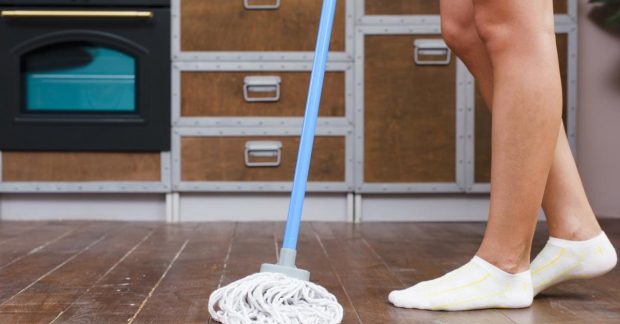
Evening cleaning: why superstitions arose and is there a rational side to them
We explore why the tradition of not sweeping after 6 PM has not only mystical but also practical roots.
 🛡️Security
Military expert predicts logistics crisis for occupiers in Crimea by year-end
The Russian military grouping in Crimea is effectively in operational encirclement due to logistics disruptions, says retired National Guard Major Oleksiy Hetman.
 🛡️Security
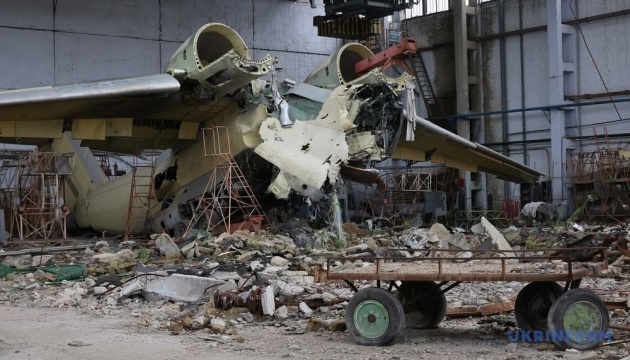
Kharkiv Aircraft Plant estimates damage from Russian shelling at UAH 6 billion
The Kharkiv State Aircraft Manufacturing Company has recorded massive destruction due to constant Russian attacks, with damages estimated at UAH 6 billion.
 🇺🇦Ukraine
Trump Administration Sets Deadline for Peace Deal: Kyiv and EU Fear Concessions
The White House is demanding a peace agreement between Ukraine and Russia by January, sparking concern among European partners and the Ukrainian leadership.