How to properly fertilize indoor begonias for lush blooms: expert tips for plant lovers
Indoor plant enthusiasts have learned effective care routines for begonias. Experts recommend adjusting fertilizers based on the plant's growth stage.
 🏙️City
Photo: UNIAN
Key points
- Begonias need regular feeding due to limited pot soil
- Fertilizer composition changes from balanced mixes to phosphorus-potassium formulas
- Always apply fertilizers to pre-moistened soil to protect roots
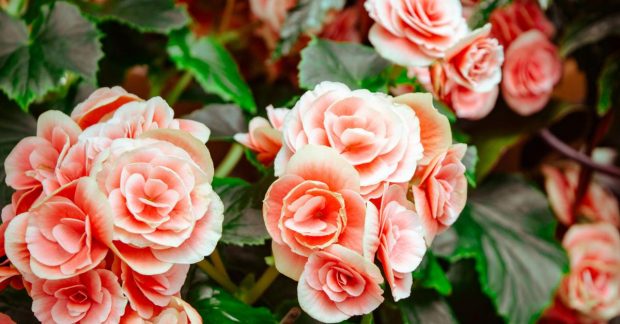
Indoor begonias remain popular due to their vibrant and lush blossoms. Because of the limited soil volume in pots, nutrients wash out quickly, requiring regular and careful fertilization to keep the plants strong and healthy.
Experts note that there is no single universal fertilizer, as everything depends on the growth stage and variety. In spring, when plants wake up from winter dormancy and start growing green mass, balanced NPK fertilizers with equal parts of nitrogen, phosphorus, and potassium are recommended.
Caring during the blooming stage
Once the plant begins forming buds, the fertilization approach changes. Nitrogen should be removed from the mix, as it promotes leaf growth instead of flowers. Instead, the focus shifts to phosphorus and potassium, using options like superphosphate or potassium monophosphate.
It is essential to apply fertilizers only to moist soil, meaning the pot should be watered with plain water beforehand to ensure better nutrient absorption. Liquid fertilizers are preferred over dry ones for indoor plants as roots absorb them almost immediately.
Frequency and safe dosage
The standard feeding frequency is every 10 to 14 days until flowering ends. For exceptionally lush blooms, some growers feed begonias weekly by diluting the concentrate four times stronger than recommended by the manufacturer to avoid root burn.
Organic alternatives include bone meal, seaweed extract, wood ash, and compost. Once the flowers drop, begonias enter a dormant state, and all fertilization should be paused until the next blooming cycle.
Source UNIAN — unian.ua/lite/advice/chem-podkormit-begoniyu-dlya-cveteniya-polezno… ↗
Read next
 🚨Events
Electricity Restored in Rivne Region After Russian Attack
Electricity has been restored in the Rivne region after a Russian attack caused power outages in over 50 settlements.
 🎭Culture & Sport
Autumn Rose Care: Expert Tips for Gardeners
Experts explain why gardeners should avoid radical pruning of roses until the first hard frosts arrive.
 🛡️Security
Estonia comments on incident involving Russian vessel in Gulf of Finland
Estonian Foreign Minister Margus Tsahkna stated that Ukraine has the right to defend itself against Russian aggression following the incident at sea.
 🛡️Security
Rescue operation in Dymer: 89-year-old woman pulled from rubble of destroyed building
In the town of Dymer, Kyiv region, rescuers continue clearing debris after a Russian drone attack, where they managed to save an elderly woman.
 🛡️Security
Russian corvette 'Merkury' in Libya: potential maritime drone attack
An explosion occurred on the Russian warship 'Merkury' in the Libyan port of Benghazi. According to international media, the incident may have been caused by an attack fr…
 🛡️Security
Russia tests NATO defense algorithms through airspace violations
Military experts point to systematic attempts by the Russian Federation to test the Alliance's reaction speed by flying missiles and drones into neighboring territories.