New Species of Green Flying Frogs Discovered in Sulawesi Rainforests
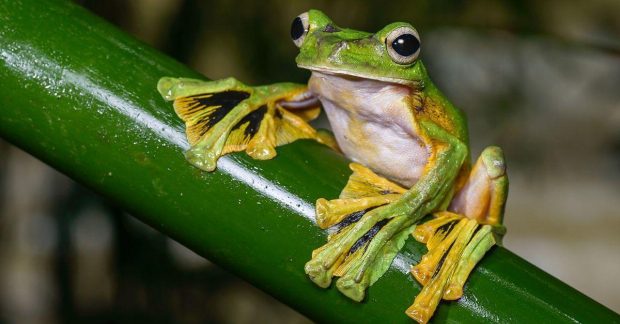
Scientists have identified a previously unknown amphibian species in the Indonesian mountains that glides between trees and protects offspring using an unusual gelatinous mass.
 🧠AI Analysis
Photo: UNIAN
Key points
- New species of flying frog Rhacophorus kurniatiae discovered
- Discovery made in the mountains of Sulawesi Island, Indonesia
- Amphibians use a gelatinous mass instead of moss for eggs
- Research published in the scientific journal Zootaxa
The global scientific community is discussing a new zoological discovery made in remote tropical ecosystems. Researchers have identified a previously unknown species of bright green amphibians possessing a unique gliding ability and distinctive reproductive behavior. The results of the extensive research were officially announced in November, and the formal description of the new species appeared in the journal Zootaxa.
Remarkable Findings in Indonesian Mountain Ranges
The searches spanned several years within the Mekongga mountain range on Sulawesi Island. Scientific expeditions covered challenging routes from the coast to the highlands. Specialists recorded the highest concentration of amphibians near a small high-altitude body of water. According to members of the research team from the University of California, Davis, the population was so dense that it practically blanketed the pond's shoreline.
These creatures belong to a specialized group of Asian tree-dwelling amphibians. Thanks to large webbing on their feet, they can cover significant distances in the air, moving between tropical tree canopies. To prove the uniqueness of the finding, biologists performed comprehensive analyses comparing morphological traits, genetic material, and animal vocalization patterns.
A Revolutionary Reproductive Strategy
The primary distinguishing feature of the new amphibian, named Rhacophorus kurniatiae, is its reproductive strategy. While related species typically construct protective moss nests to retain moisture, these frogs adopted a different method. They deposit their eggs into a specialized gelatinous substance placed on plant branches hanging over the water.
«This is the first time we have observed a Rhacophorus utilizing a gelatinous matrix as a reproductive strategy», — emphasized lead author Alamsyah Elang Nusa Herlambang.
Such discoveries remind us of how underexplored our planet's wildlife remains. Every unique finding expands our understanding of evolutionary processes and the adaptive mechanisms of living organisms in the most remote corners of the globe.
Source UNIAN — unian.ua/curiosities/rhacophorus-kurniatiae-v-indoneziji-znayshli-n… ↗
Read next
 🛡️Security
Russian Government Allocates Over $500 Million for Ferries to Bypass Kaliningrad Logistics Constraints
The Russian cabinet has announced significant funding for new railway ferries aimed at mitigating transit restrictions for the Kaliningrad exclave.
 ⚽Sport
Carlos Alcaraz sets historic prize money record at a single tennis tournament
Spanish tennis player Carlos Alcaraz earned a record $5.17 million by winning the ATP Finals-2026 in Turin.
 💼Economy
How to Tell Male and Female Chicks Apart in Their Early Days
Experienced poultry keepers share methods to determine the sex of newborn chicks, helping to manage backyard flocks more efficiently.
 🏛️Politics
US Congressional Election Results: Implications and Opportunities for Ukraine
Democratic control of both US congressional chambers offers a renewed institutional role in foreign policy, yet long-term aid still requires bipartisan consensus.
 🏙️City
Winter is coming: forecasters predict snow and ice on roads for the coming days
Ukraine is expecting a sharp change in weather with snow, gusty winds, and icy roads over the next few days.
 🏙️City
Winter weather and frosts are hitting Ukraine this week: what to expect
A sharp change in weather is expected across Ukraine this week, bringing precipitation followed by genuine November frosts.